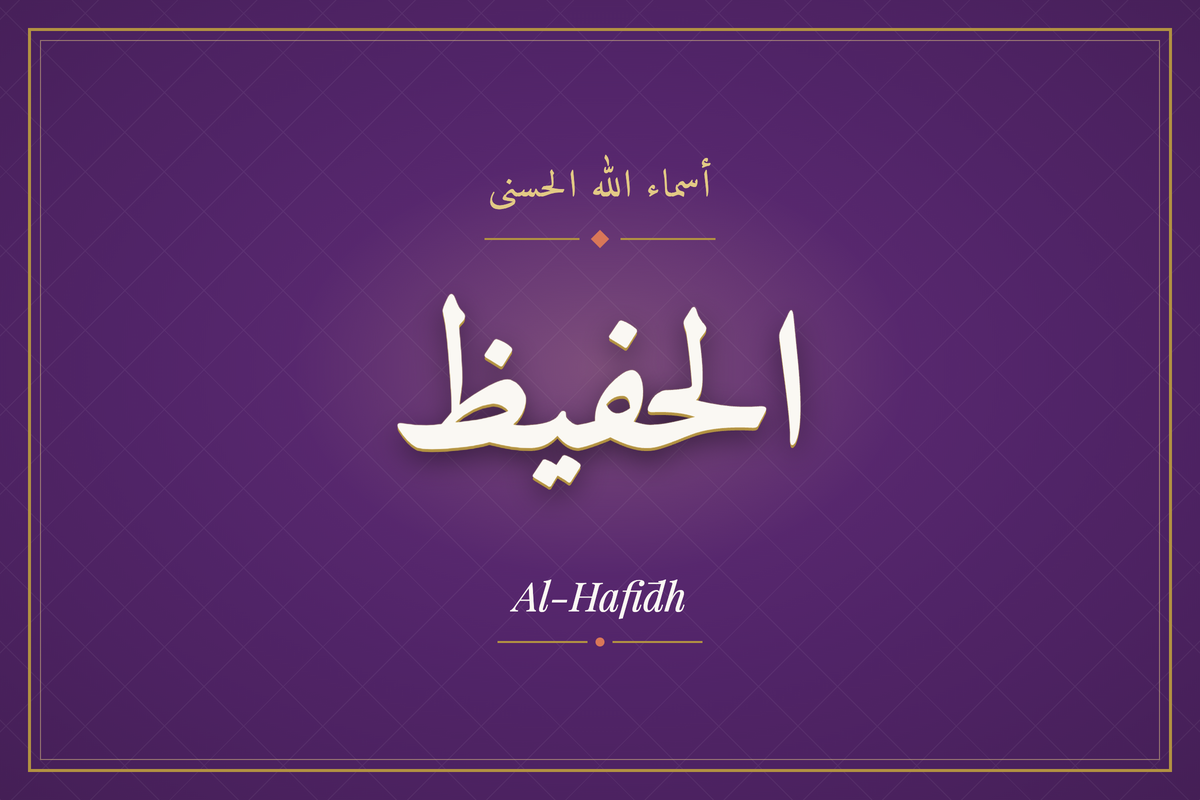
Al-Hafīdh (الحَفِيظ), "The Guardian," "The Preserver," is the Name of Allah who watches when everyone is sleeping. He sustains the heavens and the earth, preserves every creature, keeps account of every deed, and protects His servants from a thousand dangers of which they will never be aware. To entrust one's family, wealth, and heart to Al-Hafīdh is to place them under a guardianship that never weakens.
What does Al-Hafīdh mean?
The name Al-Hafīdh comes from the Arabic root hā'-fā'-dhā' (ح ف ظ), which expresses guarding, preservation and safeguarding. Applied to Allah, this Name designates:
- The preservation of the universe: He maintains the heavens and the earth in their order, without their guardianship being a burden to Him (2:255).
- The conservation of deeds: nothing that the servants do is lost or forgotten; everything is recorded for the Day of Reckoning.
- The protection of the servants: He averts evil from them, entrusts angels to guard them and watches over those who guard Him — that is, who observe His commandments.
Al-Hafīdh in the Qur'an
The prophet Hūd declared to his people:
إِنَّ رَبِّي عَلَىٰ كُلِّ شَيْءٍ حَفِيظٌ
"Indeed, my Lord is Guardian over all things." (Surah Hūd, 11:57)
And Ya'qūb, forced to entrust Binyāmīn to his sons, concluded:
فَاللَّهُ خَيْرٌ حَافِظًا ۖ وَهُوَ أَرْحَمُ الرَّاحِمِينَ
"Allah is the best guardian, and He is the Most Merciful of the merciful." (Surah Yūsuf, 12:64)
Allah has also taken charge of the preservation of His revelation: "Indeed, it is We who have sent down the Reminder, and indeed, We will be its guardian." (Surah Al-Hijr, 15:9) — fourteen centuries later, the Qur'an is recited identically from one end of the earth to the other.
« Preserve Allah, He will preserve you »
The Prophet ﷺ said to the young Ibn 'Abbās: « O young man, I will teach you some words: preserve Allah, He will preserve you. Preserve Allah, you will find Him before you. » (reported by At-Tirmidhī)
Divine protection has a key: keeping oneself within the limits of Allah — His prayer, His prohibitions, His rights. He who takes care of his relationship with Allah finds Allah watching over him, his children and his affairs.

Living with Al-Hafīdh Daily
1. Trust without anxiety
Children gone to school, a loved one traveling, a project launched: after taking the necessary means, the believer entrusts everything to Al-Hafīdh and sleeps peacefully. Perpetual worry is the symptom of a heart that believes itself to be the sole guardian.
2. Preserve the boundaries of Allah
The hadith of Ibn 'Abbās traces the contract: prayer at its time, the gaze preserved, lawful earnings. Each boundary preserved is a protection subscribed to with the Guardian.
3. Recite the adhkār of protection
Morning and evening, the Prophet ﷺ placed himself under divine protection: Āyat al-Kursī before sleeping, the three final surahs, the invocations of morning and evening. These formulas are not talismans: they are the prophetic way of asking for the guardianship of Al-Hafīdh.
Invocation with the Name Al-Hafīdh
The Prophet ﷺ taught: بِسْمِ اللَّهِ الَّذِي لَا يَضُرُّ مَعَ اسْمِهِ شَيْءٌ فِي الْأَرْضِ وَلَا فِي السَّمَاءِ وَهُوَ السَّمِيعُ الْعَلِيمُ
"In the name of Allah: with His name, nothing can cause harm, neither on earth nor in the heavens, and He is the All-Hearing, the All-Knowing" — three times in the morning and evening. (reported by Abū Dāwūd and At-Tirmidhī) You can also supplicate: "Yā Hafīdh, ihfadhnī wa ahlī wa mālī" — "O Guardian, preserve me, my family, and my wealth."

Frequently Asked Questions about Al-Hafīdh
What is the difference between Al-Hafīdh and Al-Wakīl?
Al-Hafīdh guards and preserves from loss and harm; Al-Wakīl is the Guarantor to whom one entrusts their affairs and who takes charge of them. Guardianship is one of the effects of guarantee: he who takes Allah as Wakīl benefits from His hifdh.
What about guardian angels?
Allah says: "For him are successive angels, before him and behind him, who guard him by Allah's command" (Surah Ar-Ra'd, 13:11). Divine guardianship is also exercised through these guardians deployed around the servant — until the decree comes which none can escape.
If Allah is Guardian, why do misfortunes occur?
Divine guardianship does not mean the abolition of trials: it means that nothing reaches us except by Allah's decree, that countless harms are averted without our knowing it, and that what touches us is recorded, compensated, and never lost for the patient believer.
📚 Continue reading the 99 Names
−5% off the entire library with code BLOG5
Valid throughout the site, with no minimum purchase — our thanks to blog readers.
Discover our books on the Names of Allah